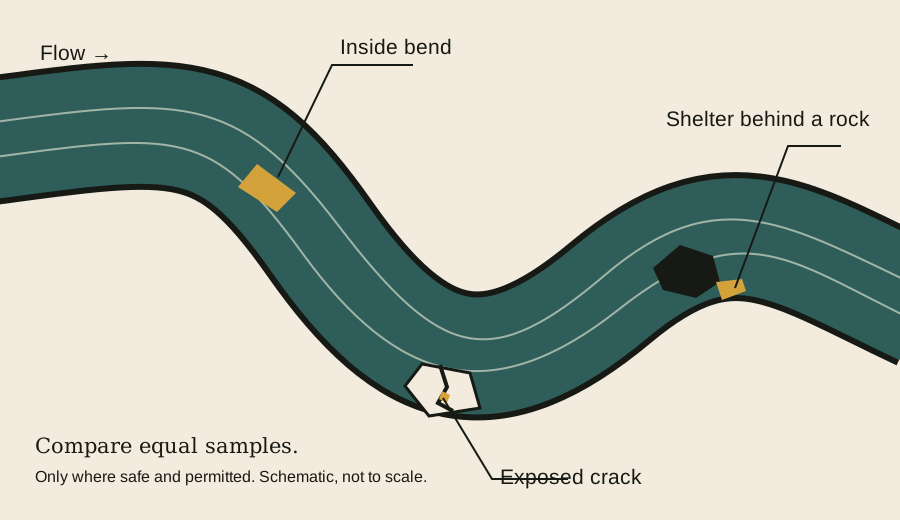
What a sluice changes
A sluice directs water and sediment over capture features so that some heavy material stays behind. It can process more feed than a pan, but poor setup or excessive feed can lose the particles you want. More material moved is not automatically a better result.
Resolve the method first
DOC lists non-motorised hand tools and notes that sluice size limits may apply. Read the specific NZ designation schedule as well as the national guidance. A pump-fed highbanker is not the same activity as placing a hand sluice in a permitted reach. Do not add a pump because a shop calls its product a beginner kit.
Use a test you can repeat
First compare small hand-panned samples within the permitted bed. If you cannot control a pan or identify a reason to use the sluice, keep practising. If a sluice is permitted, follow its manufacturer instructions for installation and feed. Avoid generic angle or throughput promises: water volume and design differ.
In a contained practice setup, retain the discharge and pan it to check losses. Feed slowly and consistently, then examine what the capture material retains. Record feed size, water condition and cleanup observations so the next change is meaningful.
Read the warning signs
Material packed solid over capture surfaces, surging water and gravel racing through without settling are reasons to stop and assess. Do not alter the stream, block fish passage or excavate banks to force an unsuitable setup to work. If the permitted location cannot support the tool, change the tool or the trip.
Clean up without losing the lesson
Recover concentrate over a bucket or tray and finish it in a pan. Keep the first test’s tailings until you understand the setup. Restore disturbances, account for every piece of equipment and clean freshwater gear between waterways.
Try this before the next step.
Compare a pan-only day with a proposed sluice day: permission, weight, water, setup, cleanup and disturbance. Write the specific benefit that would justify the extra kit.
Sources & checks
These sources support the factual background. Exercises and buying checklists are Paystreak editorial suggestions, not reported recoveries, product tests or personal financial advice. Check live rules and notices before acting.